
The Bush admin istration’s warnings that a world war could be fought as a result of a US-Iranian confrontation inevitably raise the question: what other countries might be drawn into a military conflict set into motion by an attack on Iran by the United States?
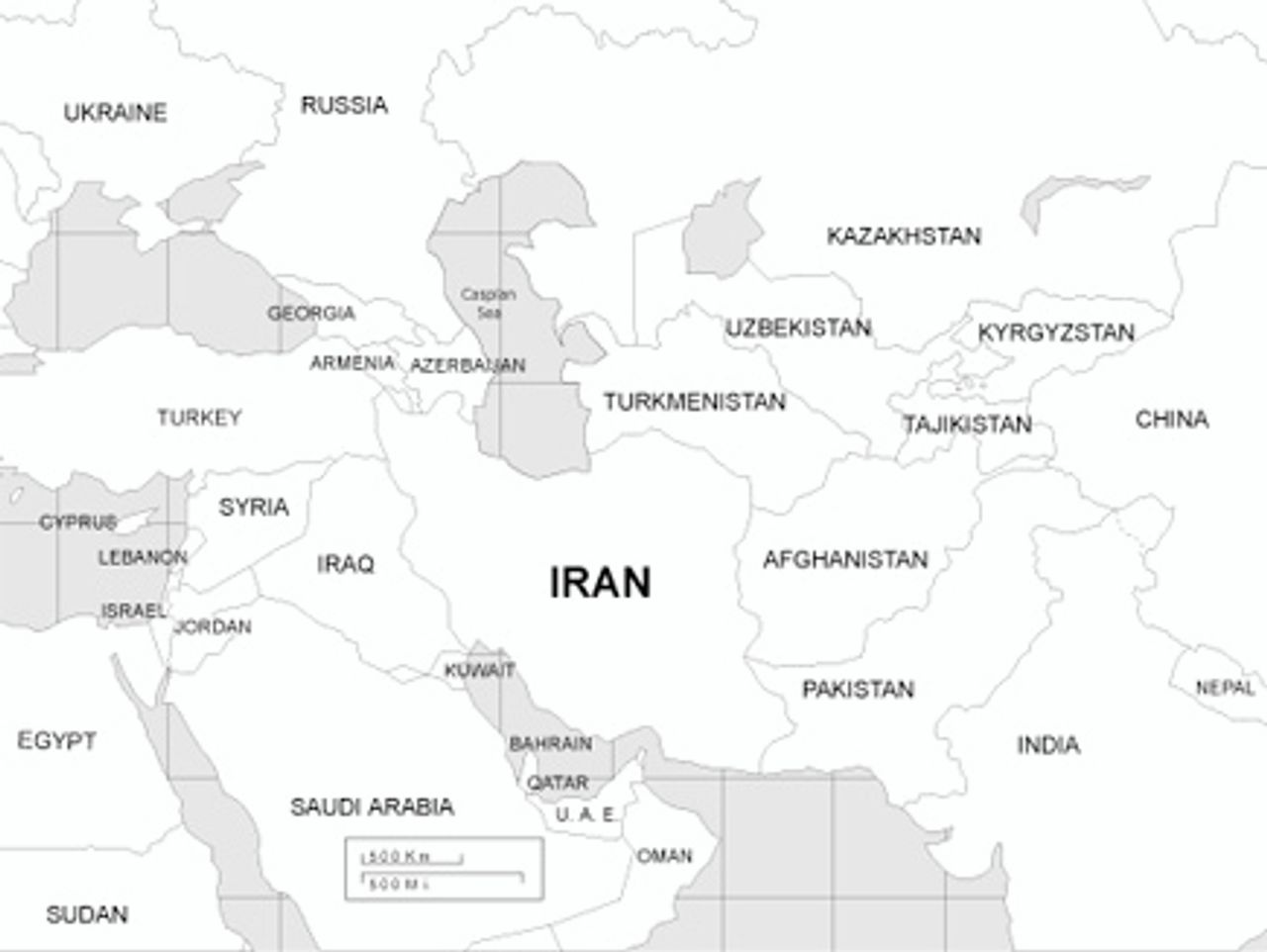
Though this question cannot be answered with certainty, it is a fact that the two countries most actively shielding Iran in negotiations over sanctions against Iran’s nuclear programs—Russia and China—have been publicly and repeatedly described as potential targets of the US military.
Both have considerably increased their economic weight relative to the US in recent years—China due to the explosive development of its cheap-labor manufacturing base, Russia thanks to the high prices for oil and gas on world energy markets. Though their interests diverge in many other areas, Russia and China are united by their fear of the economic and military consequences of a US attack on Iran. From Washington’s standpoint, however, this unity is an intolerable threat to the world position of the US bourgeoisie.
US strategists have warned that they would do all in their power to prevent the emergence of a strategic competitor on the Eurasian landmass. In his 1998 book The Grand Chessboard, former Carter administration National Security Advisor Zbigniew Brzezinski warned: “It is imperative that no Eurasian challenger emerges, capable of dominating Eurasia and thus of also challenging America.”
After the terrorist attacks of September 11, 2001, these warnings have become even more threatening, with the public announcement of preparations for nuclear war.
Iran and the Russian bourgeoisie
To the emerging Russian bourgeoisie, whose wealth is based to a great extent on its looting of the state property and natural resources of the old Soviet state, US domination of Iran is also an intolerable threat. President Vladimir Putin’s economic and geopolitical strategy has been developed around oil and gas exports, including the control of export revenues earned by Central Asian oil and gas.
The Russian bourgeoisie’s relations with Iran reflect significant financial interests. Russia’s oil and gas exports accounted for 61 percent of its export revenues in 2005 and 65 percent in 2006, according to World Bank figures.
The World Bank concluded: “Outside of natural resources and metals, Russia has few advantages on international markets.” The Russian bourgeoisie thus has every reason to prevent the US from controlling Iran and gaining an even tighter hold on world oil and gas markets—by controlling Iran’s oil and gas, or by building new, competing export pipelines from the former Soviet republics of Central Asia.
The military component of Russia’s opposition to US control of Iran is, if anything, even more essential.
US imperialism does not view the collapse of the USSR as a reason to accommodate the Russian bourgeoisie, but rather as an invitation to press its advantage. This was underscored in a 2005 analysis, “America Unplugged,” by the Stratfor web site, which has close links to US intelligence agencies.
Strafor wrote: “The Soviet Union also came as close as any power ever has to uniting Eurasia into a single, integrated, continental power—the only external development that might be able to end the United States’ superpowership. These little factoids are items that policymakers neither forget nor take lightly. So while US policy towards China is to delay its rise, and US policy towards Venezuela is geared toward containment, US policy towards Russia is as simple as it is final: dissolution.”
Muslim separatists in Russian regions of the Caucasus, such as Chechnya and Dagestan, have enjoyed Washington’s tacit support, while the Russian state views the struggle against them as a critical national security issue.
Iran has served as a critical counterweight to US criticism of Russia’s role in these wars. As analyst Brenda Shaffer wrote in a 2001 Washington Institute for Near East Policy paper, “Partners in Need”: “Moscow views cooperation with Tehran as essential for preventing a Muslim backlash in response to Russian activities in Chechnya: the official Iranian view of the conflict as an internal Russian affair undermines Muslim efforts to band together against Moscow.”
Besides the implications for ethnic conflicts in the Caucasus and Central Asia, US bases in Iran would have global implications for US-Russian conflict. They would place US spy and attack planes even closer to Russia’s southern border, which has long been identified by the US military as one of its least well-defended.
Much of Russia’s highest-security military, nuclear, and space infrastructure is located in northern Kazakhstan and western Siberia—areas which were once the furthest points on the globe from any US military facility, but are now increasingly vulnerable to US strikes from the south.
Russian acquiescence to US military action against Iran would therefore be predicated, at the very least, on the US giving security guarantees to Russia. However, US policy towards Russia—supporting regimes in Azerbaijan and Georgia hostile to Moscow, and pushing for the deployment of a “missile shield” in Central Europe directed against Russia’s nuclear arsenal—makes such guarantees impossible.
The administration of Russian President Putin has therefore pursued an increasingly confrontational policy. It supplied Iran with high-tech missile systems, notably Tor-M1 anti-aircraft missiles, which Tehran reported successfully testing in February 2007. It is also rumored to have supplied Iran with advanced Moskit anti-ship cruise missiles that are updated models of Soviet missiles designed for attacking US aircraft carrier battle groups.
Direct military relations with the US have also become tenser. In August 2007, Putin ordered Soviet-era “Bear” strategic bombers to resume constant patrol flights in the North Atlantic, forcing US air defense systems to monitor them. Just this week, he officially withdrew from the Conventional Forces in Europe treaty.
Iran and the Chinese bourgeoisie
The Chinese bourgeoisie’s ties to Iran are shaped by its emergence, out of the Stalinist Chinese Communist Party, as the owners of a massive, cheap-labor manufacturing base. It holds down workers’ struggles for higher wages and living standards with a ruthless, police-state apparatus and exports much of their production. Especially as China has become the location of an ever-larger portion of world industrial production, its energy demands have spiraled upwards.
China has developed massive energy ties with Iran. It currently buys 11 percent of Iran’s oil exports, but this figure is expected to increase substantially in the coming years. Iran is reportedly China’s largest supplier of oil, and Chinese corporations have signed several large-scale deals with the Iranian government.
In 2004, for instance, China’s Sinopec Group signed a $70 billion oil and gas agreement with Iran, according to which it will purchase 250 million tons of liquefied natural gas over the next 30 years and develop Iran’s Yadavaran oil field. As part of the deal, Iran also agreed to sell China 150,000 barrels of oil per day.
China has also purchased rights to oil in Kazakhstan, its western neighbor in Central Asia, as well as in several African countries, notably Sudan.
Oil is central to many of the weaknesses of the Chinese bourgeoisie. Its oil deals serve many purposes: overcoming the energy shortages and power outages that have plagued its rapidly developing but poorly coordinated industry, and lessening the economic imbalance between its coastal exporting regions and its poorer western regions, which historically were linked to Central Asia and the Muslim world via the fabled Silk Road.
In global geopolitical terms, however, the main purpose of China’s dealings with Iran is to secure its access to energy, which at present is largely at the mercy of US naval forces in the Indian and Pacific oceans.
Oil exports from the Persian Gulf to China pass through the Indian Ocean, the Straits of Malacca, and into the South China Sea and the Pacific Ocean to the Chinese coast. Major US naval bases at Diego Garcia in the Indian Ocean, Singapore (at the end of the Straits of Malacca), and Okinawa (off the Chinese coast) lie astride each main leg of the voyage.
China has so far sought to protect its oil supply by building a competing network of naval bases—the so-called “string of pearls”—and looking for alternate shipping routes to avoid US-held strong-points. A 2006 US military study lists Chinese “string of pearls” bases at Gwadar in Pakistan, Chittagong in Bangladesh, and Sittwe in Myanmar on the Indian Ocean; and at Woody and Hainan Islands on the South China Sea.
Chinese plans for skirting the Malacca strait include building a pipeline from Sittwe in Myanmar to the southwest Chinese city of Kunming, and dredging a canal through Thailand’s Kra Isthmus. Plans for avoiding the South China Sea and Pacific include shipping oil up the Mekong River in Southeast Asia to China.
Such plans are very costly, however, and involve the Chinese Navy in a technological and military competition with the US Navy that it is not currently in a position to win. As a result, Chinese oil corporations and Chinese state planners have hoped to build a safer land route for the energy trade between China and the Middle East, passing through Central Asia and Iran.
The underlying strategic conception was outlined in a 1999 article by Xiaojie Xu in the OPEC Review, entitled “The oil and gas links between Central Asia and China: a geopolitical perspective.” Xu wrote: “In terms of regional energy links [...] China will extend its Central Asian land routes from Kazakhstan and Turkmenistan down to Northern Iran. As a result, the Chinese Central Asian corridor will connect the Gulf Area as a Sino-Arabic grand passage.”
Plans for such commercial links, ambitiously titled “The Pan-Asian Global Energy Bridge,” were regularly discussed in 2001. The US intervention in Afghanistan in the aftermath of the September 11 attacks dealt a serious blow to these ambitions, however, as Central Asian states were unwilling to openly flout US military power.
By now, however, such plans have resurfaced, amid the ebbing of US influence in Central Asia—the debacle of the US occupation of Afghanistan, and the failures of the 2005 “Tulip Revolution” in Kyrgyzstan and the Andijan uprising in Uzbekistan.
In the November 2005 issue of the Journal of Contemporary China, Professor Niklas Swanstrom writes: “By gaining control over the Central Asian network of oil pipelines, China hopes to gain control over the oil that is transported to Asia from the Middle East. This is a Herculean task and hardly possible without international cooperation.
“The logical partner for China if it wants to control the oil of the Middle East [flowing] to China is Iran. [...] A Sino-Iranian network between [the western Chinese region of] Xinjiang through Kazakhstan, Turkmenistan, and Iran to [the Iranian Persian Gulf port of] Bandar Abbas has been discussed and the conclusion of such a plan would make China the most important transit state for oil in Asia.”
Significantly, Swanstrom concluded: “America will probably attach greater importance to the region after the finalization of the ongoing wars and focus its attention on Iran.”
US nuclear primacy and preparations for war
The strategic imperatives pushing Beijing and Moscow to protect Iran from US attack clash with an American bourgeoisie determined to consolidate its hegemony—in world oil markets, the Middle East, and world shipping lanes. The tensions between the US and China, Russia and Iran have repeatedly come to public attention, as the US has adopted an increasingly threatening posture.
In January 2002, following an order from the Bush administration, the Pentagon delivered the Nuclear Posture Review to Congress. The report called for planning the use of nuclear weapons against seven countries: Russia, China, Iran, Iraq, North Korea, Syria, and Libya. The review was ultimately leaked to the Washington Post in March 2002.
The issue of US planning for nuclear war against China and Russia surfaced again in the March 2006 issue of Foreign Affairs, the publication of the highly influential US Council on Foreign Relations. In their article, “The Rise of US Nuclear Primacy,” Keir Lieber and Daryl Press argued that, due to the deterioration of Russia’s nuclear arsenal after the collapse of the Soviet Union, the US could destroy the entire Russian and Chinese nuclear arsenals with a devastating first nuclear strike. It noted several aspects of US defense spending and research suggesting that the Pentagon was actively trying to achieve this capability.
Lieber and Press noted that the policy of aggressively preparing for nuclear war against Russia and China was directly tied to the global calculations of US imperialism, particularly in the Persian Gulf. They wrote: “The United States is now seeking to maintain its global preeminence, which the Bush administration defines as the ability to stave off the emergence of a peer competitor and prevent weaker countries from being able to challenge the United States in critical regions such as the Persian Gulf. If Washington continues to believe such preeminence is necessary for its security, then the benefits of nuclear primacy might exceed the risks.”
To be continued.